The Three Categories of Uninterruptible Power Supplies (UPS)
Depending on your budget and the level of protection you need, there are 3 categories of power supplies to choose from:
- Standby (Offline UPS)
- Online UPS
- Line-interactive UPS
Here is how each one works:
1 – Standby (Offline) UPS
This is the cheapest of the three designs.
Under normal conditions, a standby UPS simply supplies your computer with regular AC power from the wall outlet.
Meanwhile, the battery stays in standby mode.
Then, when the power goes out, the UPS senses the problem and switches over to battery power.
While this works well with most electronic devices, the problem is that the switchover creates a momentary gap in power, which can be dangerous for some highly sensitive equipment.
This is why, technically, a standby UPS is not considered a “true uninterruptible power supply”: it actually does cut out, briefly.
The good news is that this brief interruption (usually under 5 milliseconds, but sometimes 20-100 milliseconds) is within what ordinary desktop computers can tolerate.
For more critical applications, however, it is safer to go with the next design.
2 – Online UPS
The best and most expensive of the three designs is the online UPS (the true uninterruptible power supply).
In the past it was used only for large commercial operations, but modern technology has made it reasonably affordable for consumers too.
To provide truly “uninterrupted” backup power during an outage, it uses the “Double Conversion UPS” method, which works like this:
- It takes regular AC power from the wall outlet and converts it to DC to charge the battery.
- It takes DC power from the battery and converts it back to AC, which it uses to power your computer.
So unlike a standby UPS, which steps in only when there is a problem, an online UPS continuously conditions the power through the battery before sending it to the computer.
This has two major advantages:
- During a power outage there is no interruption at all, not even a momentary one, because the computer is already running on battery power.
- The power supplied to the computer stays clean and perfectly stable, because it is always regulated by the battery.
The only drawback of Double Conversion UPS is that it consumes much more power than ordinary standby units.
To improve energy efficiency, however, there is another method known as “delta conversion”, which sends part of the power directly to the computer instead of passing it through the battery.
This technology is not cheap either, since online UPS units typically cost several thousand pounds, which is beyond most consumers’ budgets.
That is why I recommend the next design for most people.
3 – Line-interactive UPS
Although a power outage is what we fear most, in many areas the most common power problems are actually momentary fluctuations in the supply.
The problem is that standby units handle these fluctuations poorly, since they have to switch between the battery and regular AC power many times.
This noticeably shortens battery life by wasting energy unnecessarily, and annoys users with constant repeated alarms.
On the other hand, online UPS units handle these fluctuations very well, because they can hold a steady voltage by relying on the battery continuously. But as you know, they are also expensive.
Fortunately, line-interactive UPS units also handle these fluctuations well, at a much lower price, using a special type of transformer that adjusts the output voltage in proportion to momentary changes in the supply.
So when the wall power level drops, the transformer can still keep the output steady without switching to the battery.
And since line-interactive units cost only slightly more than comparable standby units, the general consensus is that they offer the best overall value of the three designs.
These are the best models I recommend, and I have narrowed the list down to the 3 biggest brands on the market.
The Top 3 UPS Brands
Without a doubt, the 3 biggest UPS manufacturers are:
- EPS
- CyberPower
- APC
Related products
-
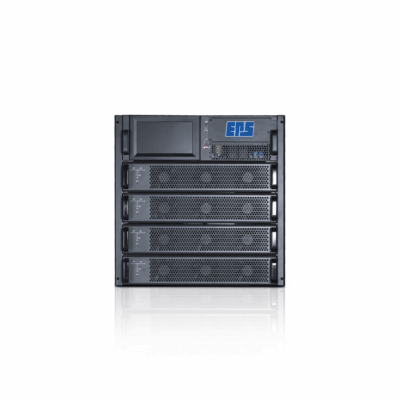 40 KVA 40 KWIn stock
-
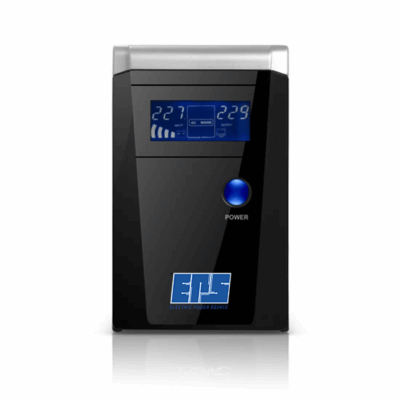 600 VA 360 WCurrently unavailable